
African Cooking Ingredients: The Complete Beginner's Pantry Guide
Walk into any West African kitchen and you'll notice something right away: the flavor doesn't come from one single "secret ingredient," it comes from a whole pantry working together. Smoky dried fish, deep red palm oil, fiery scotch bonnet peppers, and a handful of seasoning staples all combine to build the bold, layered taste that defines the cuisine. If you're new to cooking African food, or you've been missing the taste of home and want to rebuild your pantry from scratch, this guide breaks down the essential African cooking ingredients you'll actually use again and again.
According to Wikipedia's overview of West African cuisine, the region's cooking is built around starchy staples, richly spiced stews, and a strong tradition of fermented and dried foods, a combination that shows up clearly once you understand the ingredients behind it.
Starchy Staples: The Foundation of Every Meal
Almost every West African meal is built around a starch, and understanding these is the first step to cooking authentically.
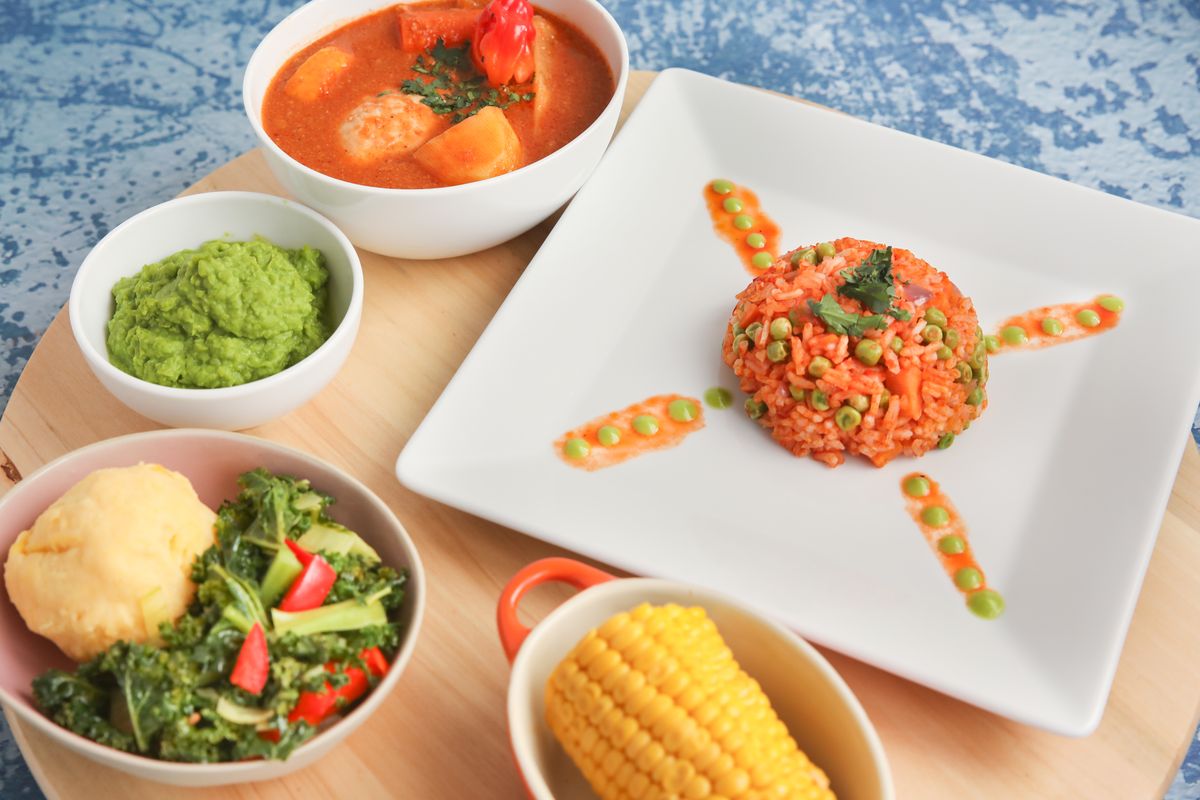
Rice. Long-grain rice is the base for jollof rice, waakye, and countless other dishes. The variety matters more than people expect, since some rice types hold up better to the long simmering that jollof requires.
Yam. Fresh yam can be boiled, fried, or pounded into a smooth, stretchy dough called pounded yam, a classic pairing for soups and stews.
Plantain. Whether fried into golden slices, boiled, or turned into chips, plantain shows up constantly across West African cooking, both as a side and as a snack.
Cassava and cassava-based staples. Garri, fufu flour, and semovita are all cassava or corn-derived staples used to make the soft, dough-like "swallow" foods that accompany soups.
Essential Oils and Fats
Palm oil. Deep red and richly flavored, palm oil is the backbone of countless West African stews and soups. Its distinctive color and taste are hard to substitute, which is why it's one of the first ingredients most home cooks stock up on.
Groundnut (peanut) oil. A lighter, more neutral option used for frying and everyday cooking, often paired with groundnut paste in soups like groundnut soup.
Spices, Seasonings, and Aromatics
This is where a lot of the depth of flavor actually comes from, and it's often the category beginners underestimate.
Seasoning cubes. A small, concentrated cube used in nearly every stew and soup base, adding a savory foundation that ties the other flavors together.
Suya spice. A bold, peanut-based spice blend traditionally used on grilled skewered meat, but increasingly used to season all kinds of proteins and vegetables.
Curry powder and thyme. Common in stews and jollof rice, these bring warmth and earthiness without overpowering the dish.
Ginger and garlic. Used fresh or ground, these form the aromatic base for countless soups, stews, and marinades.
Scotch bonnet peppers. The primary source of heat in most West African cooking. Fresh, dried, or blended into pepper sauce, scotch bonnets bring a fruity heat that's distinct from other chili varieties.
Prekese and other spice pods. Regional spice pods like prekese add a subtly sweet, aromatic quality to soups and are especially valued in Ghanaian cooking.
Proteins: Fresh, Dried, and Smoked
Dried and smoked fish. A staple protein across the region, dried and smoked fish add deep umami flavor to soups and stews. Varieties like stockfish and dried tilapia are pantry essentials in many households.
Goat meat. A common protein for stews, soups, and grilled dishes, prized for its rich flavor.
Crayfish (ground dried shrimp). Often overlooked by newcomers, ground crayfish adds a savory, slightly briny depth to soups that's hard to replace with anything else.
Legumes, Seeds, and Thickeners
Egusi (melon seeds). Ground and used as the base for egusi soup, these seeds add both thickness and a distinct nutty flavor.
Black-eyed peas and beans. Used in dishes like waakye and moin moin, these legumes are a major source of plant-based protein across West African cooking.
Okra. Both a vegetable and a natural thickener, okra shows up in soups where a slightly silky texture is part of the dish's character.
Sauces, Pastes, and Condiments
Shito. Ghana's beloved black pepper sauce, made from smoked fish, dried shrimp, and chilies, adds smoky heat to almost anything it touches.
Hot pepper sauce. Whether homemade or store-bought, a good pepper sauce is a near-constant table condiment, used to add heat to rice, stews, kenkey, and more.
Tomato paste. A concentrated base for jollof rice and stews, tomato paste provides both color and a deep savory-sweet foundation.
Building Your First African Pantry
If you're starting from scratch, it helps to prioritize. A solid starter set includes rice, palm oil, seasoning cubes, curry powder, dried crayfish, scotch bonnet peppers (fresh or dried), and one swallow staple like fufu flour or garri. From there, you can build outward toward more specialized ingredients like suya spice, egusi, or prekese as your cooking repertoire grows.
The challenge for a lot of home cooks outside major cities is actually finding these ingredients. A regular supermarket rarely stocks palm oil, egusi, or dried crayfish, which is why so many people end up turning to a dedicated African grocery store online to source their full pantry in one order rather than piecing it together from multiple specialty stores.
How Ingredients Vary Across the Region
West African cooking isn't one single style, and the ingredients used often shift depending on the country and even the specific ethnic group. Ghanaian cooking leans heavily on palm oil, groundnut paste, and fermented corn staples like kenkey and banku. Nigerian cooking spans an enormous range of regional styles, from the tomato-rich stews of the south to the drier, spice-forward dishes found further north. Understanding that African cooking ingredients aren't one uniform list, but a shared foundation with regional variation layered on top, makes it easier to appreciate why two jollof rice recipes from different countries can taste so different from each other while still being unmistakably West African.
Common Mistakes First-Time African Cooks Make
Skipping the seasoning cube. It looks small and unassuming, but leaving it out of a stew or soup base often results in a dish that tastes noticeably flat compared to the real thing.
Using too little oil. West African stews and soups are typically built on a generous base of oil, since it carries much of the flavor from the peppers, tomatoes, and aromatics. Cutting back too much changes both the taste and the texture.
Underestimating scotch bonnet heat. A single scotch bonnet pepper can be significantly hotter than milder chili varieties, so first-time cooks often add far more than a recipe calls for and end up with an overwhelmingly spicy dish.
Rushing the swallow. Fufu, garri, and similar swallow staples require attention to water ratio and stirring technique to get the right texture. Rushing the process usually results in something either too stiff or too runny.
A few storage habits go a long way toward keeping these ingredients fresh. Palm oil solidifies at cooler temperatures, which is normal and doesn't affect quality, it simply liquefies again once warmed. Dried fish, crayfish, and egusi should be kept in airtight containers, ideally refrigerated or frozen, to prevent moisture and pests. Fufu flour, garri, and semovita store best in a cool, dry pantry in sealed bags or containers. Fresh scotch bonnet peppers freeze well whole, making it easy to keep a steady supply on hand without frequent shopping trips.
Frequently Asked Questions
What are the most essential African cooking ingredients for a beginner?
A strong starter pantry includes rice, palm oil, seasoning cubes, curry powder, dried crayfish, scotch bonnet peppers, and one swallow staple like fufu flour or garri. These cover the base of most common stews, soups, and rice dishes.
Can I substitute regular chili peppers for scotch bonnet peppers?
You can, but the flavor will be noticeably different. Scotch bonnets have a fruity, slightly sweet heat that's distinct from most other chili varieties, so while a substitute will add spice, it won't fully replicate the traditional flavor.
Where can I buy authentic African cooking ingredients in the U.S.?
Specialty items like palm oil, egusi, dried crayfish, and fufu flour are best sourced from African grocery stores, either locally or online, since mainstream supermarkets rarely carry the full range. For nationwide options, see our guide on how to buy African food online in the USA.
How long do dried African cooking ingredients last?
Properly stored in airtight containers, dried ingredients like crayfish, egusi, and stockfish can last several months, and even longer when refrigerated or frozen.
Why does palm oil look solid sometimes?
Palm oil naturally solidifies in cooler temperatures. This is completely normal and doesn't affect its quality, it simply returns to a liquid state once warmed during cooking.
Final Thoughts
African cooking ingredients might look unfamiliar at first glance, but once you understand the role each one plays, from the starchy base to the aromatic seasoning to the finishing sauce, the whole pantry starts to make sense. Building it up doesn't have to happen all at once. Start with the essentials, learn how each ingredient behaves, and expand from there as your cooking grows more confident and adventurous.